Grade 11 English
3A Reading
Objectives
Students should be able to:
- locate specific information from a reading passage.
- interpret the meaning of unfamiliar words, referring to the context.
- respond to inference questions appropriately.
- use phrasal verbs appropriately.
- use gerund and infinitive with 'to' appropriately.
- listen for specific information from a talk.
- express their opinion using language phrases for agreeing and disagreeing.
- write a dialogue about eating habits of people using language phrases for agreeing and disagreeing.
- write a paragraph about a memorable event in the past.
3A Reading
Introduce
- Introduce the lesson by asking students what they understand by the topic 'Memory'.
- After listening to 3 or 4 students, explain to them that memory is something remembered from the past. It also means the power of the brain to recall past experiences or information.
- Next, ask them brainstorming questions in the pre-reading section. Encourage them to give answers that are true for them and share their answers with a friend sitting next to them.
3B Vocabulary
Introduce
Introduce some phrasal verbs by asking them whether they know the meaning of the underlined phrasal verbs in the given sentences. (Write them down on the white board.)
- I am looking for my pencil.
- I have to look after my nieces.
- Look out! The tree is going to fall down.
- Don't look down (on) anybody.
After listening to 3 or 4 students, explain to them the different meanings of these phrasal verbs.
- look for - try to find out something
- look after - take care
- look out - be careful
- look down on - have a low opinion of
3C Grammar
Gerund and Infinitive with 'to'
Introduce
Tell students that they will be learning about gerund and infinitive with 'to'.
Write the following sentences on the board.
- Mg Mg is swimming in the pool.
- Mg Mg likes swimming.
- Mg Mg likes to swim.
Ask them the different uses of the verb 'swim' in the example sentences. After listening to the answers/ opinions from 2 or 3 students, explain to them that the verb 'swim' is used as present participle (be + swimming) in the first sentence, as a gerund (swimming) in the second sentence and as the infinitive with 'to' (to swim) in the third sentence.
3D Listening
Introduce
- Listening - Tell students that they will be listening to a recording on the childhood events of Soe Thu. Play the recording at least three times.
- Speaking - Tell students that they will be studying the language expressions used in agreeing and disagreeing.
3E Writing
Introduce
- Tell students that they will have to write a short paragraph on 'An unforgettable event in my life', responding to the questions given.
- Tell them that it is a narrative writing.
Pre-reading
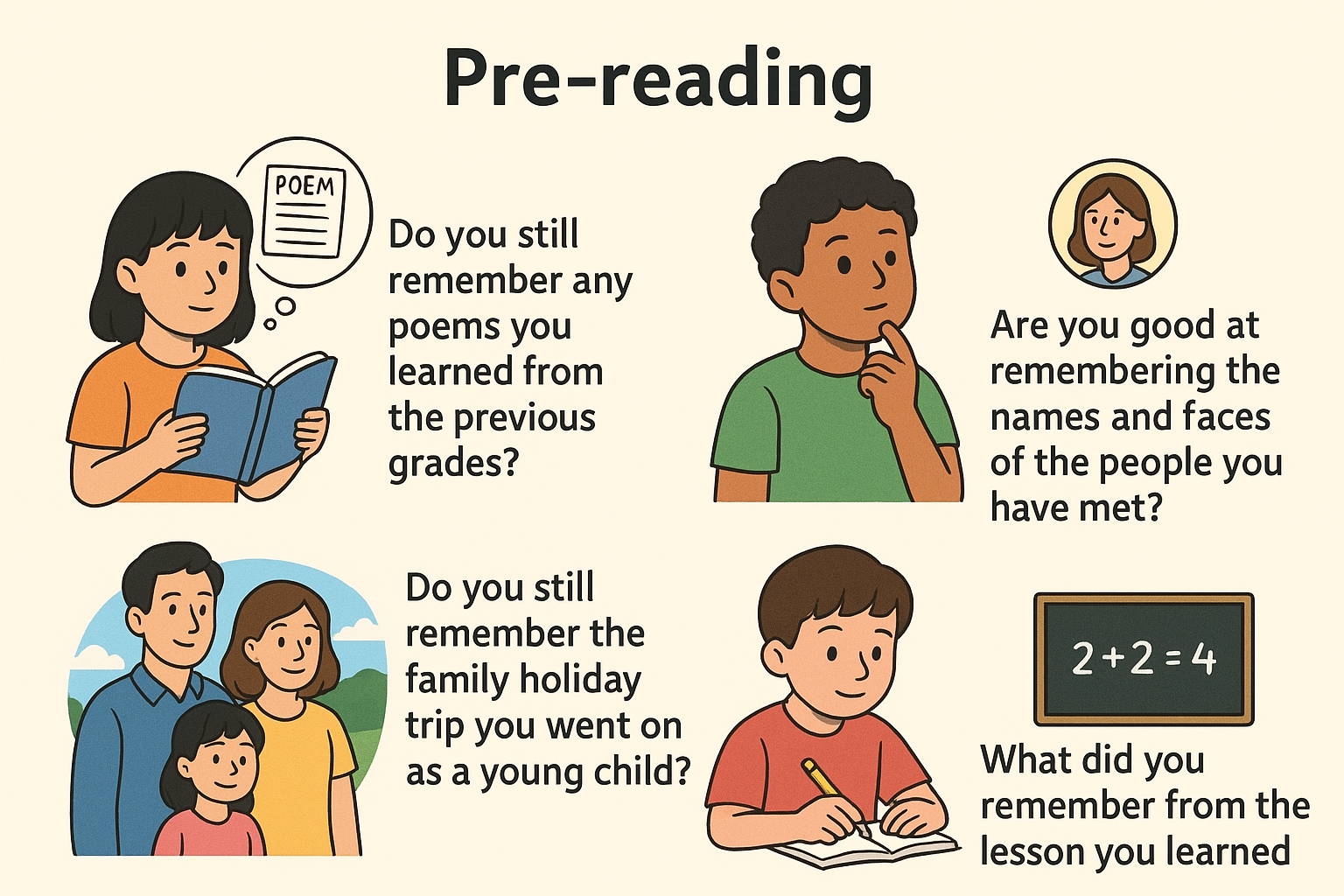
1. Do you still remember any poems you learned from the previous grades? Name them.
2. Are you good at remembering the names and faces of the people you have met?
3. Do you still remember the family holiday trip you went on as a young child?
4. What did you remember from the lesson you learned yesterday?
Read the Passage
The word 'memory' has three non-technical meanings: (1) something that we remember, e.g. a name, a number, a color, or a taste; (2) the ability to remember or recall something as in: Yes, I remember that poem; and (3) the period of time that somebody is able to remember events as in: a frightful storm in recent memory.
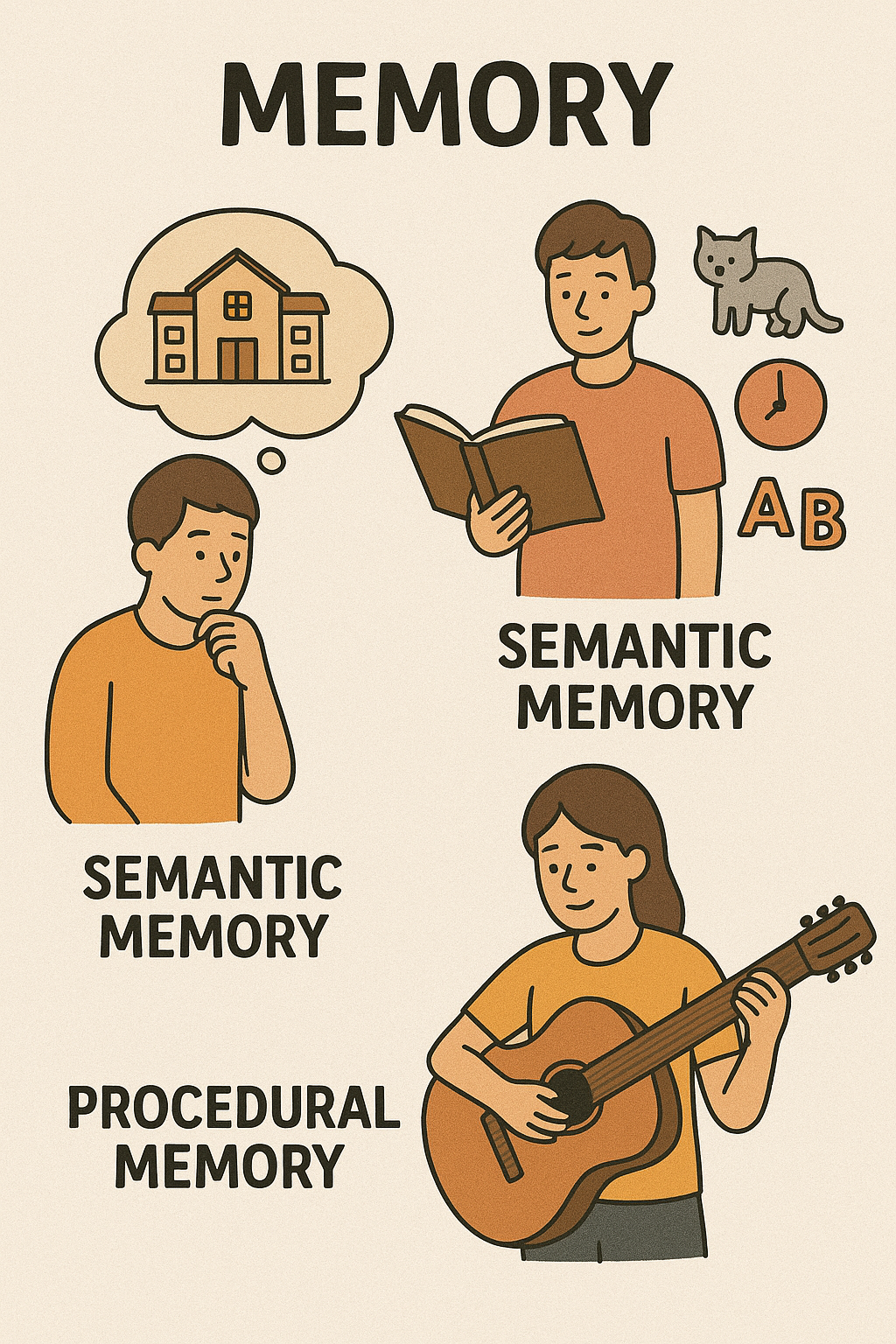
Technically, all books on psychology would say that there are three kinds of memory: (1) Episodic memory, (2) Semantic memory, and (3) Procedural memory.
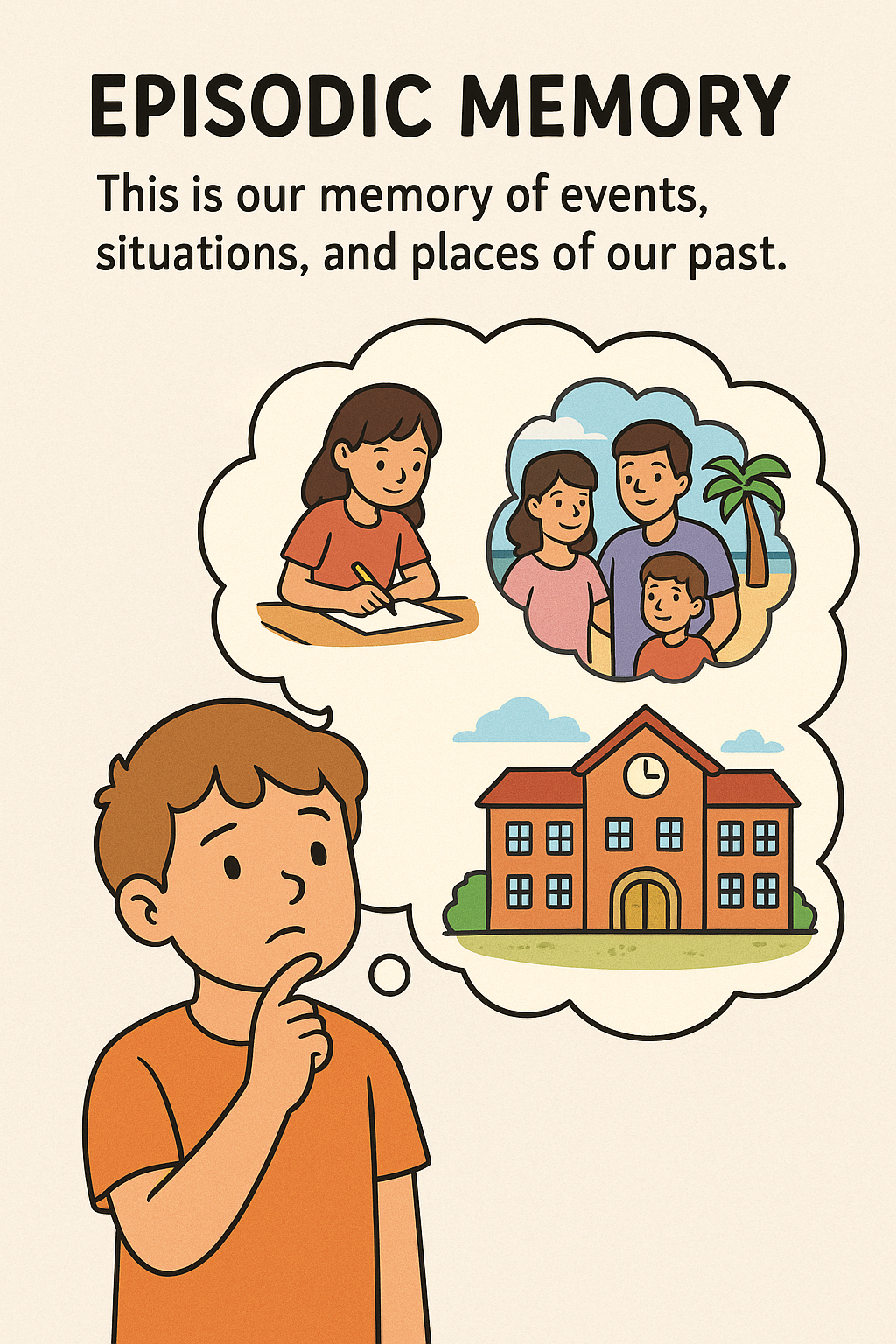
Episodic Memory
This is our memory of events, situations, and places of our past. For instance, when we are asked about our first day at school, we think back and try to recall how old we were, who took us to school, what the name of the school was, whether we cried silently or aloud, etc. Similarly, when wishing to talk about a memorable family vacation, we draw upon our episodic memory to recall as much as possible all the details of that vacation.
Semantic Memory
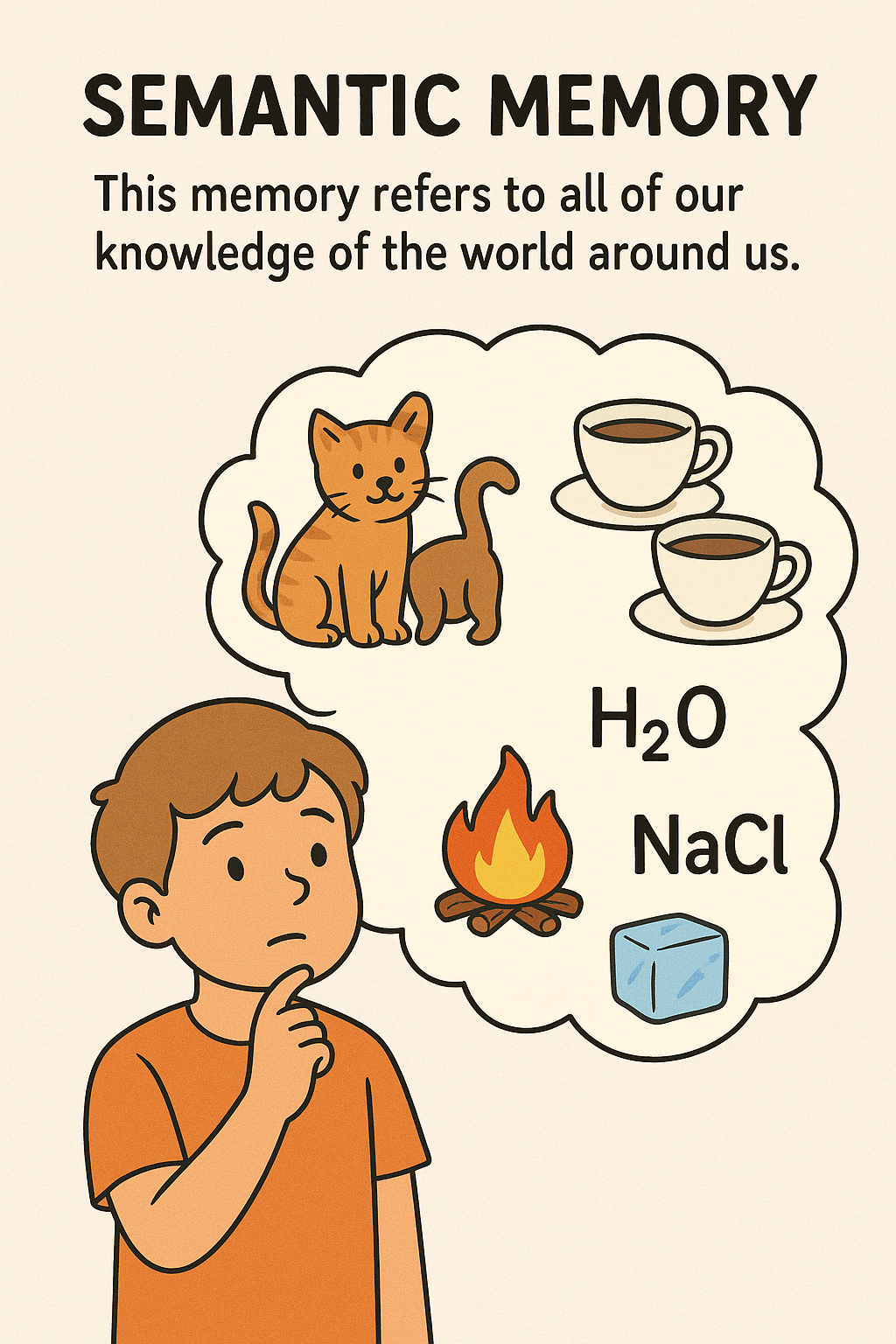
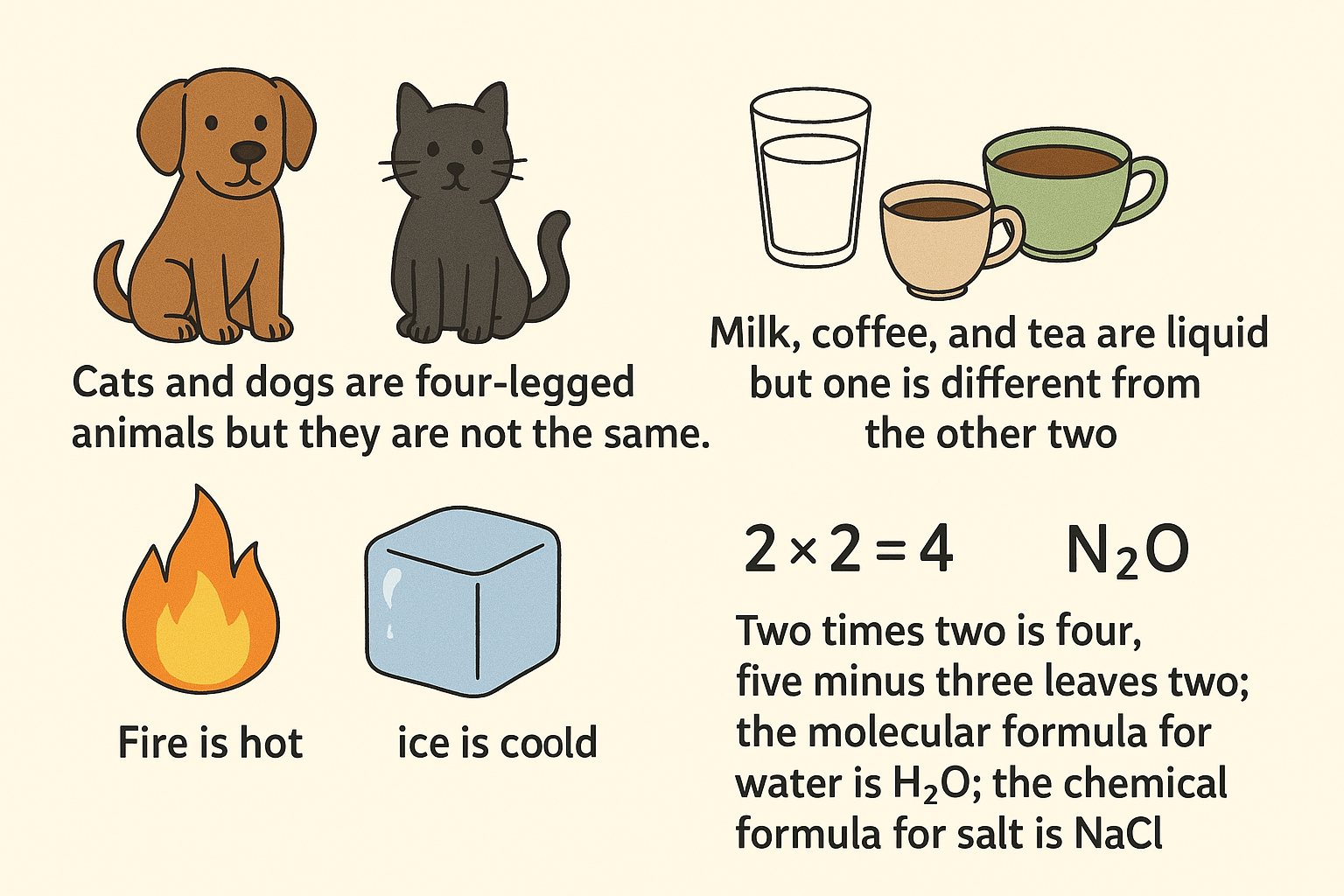
This memory refers to all of our knowledge of the world around us. For instance, we know that cats and dogs are four-legged animals but at the same time we know that they are not the same. In the same way, we know that milk, coffee, and tea are liquid but one is different from the other two. We also know that fire is hot and ice is cold. Then, we are taught and we learn that two times two is four, five minus three leaves two; the molecular formula for water is H₂O; the chemical formula for the common salt is NaCl; and many, many more.
Procedural Memory
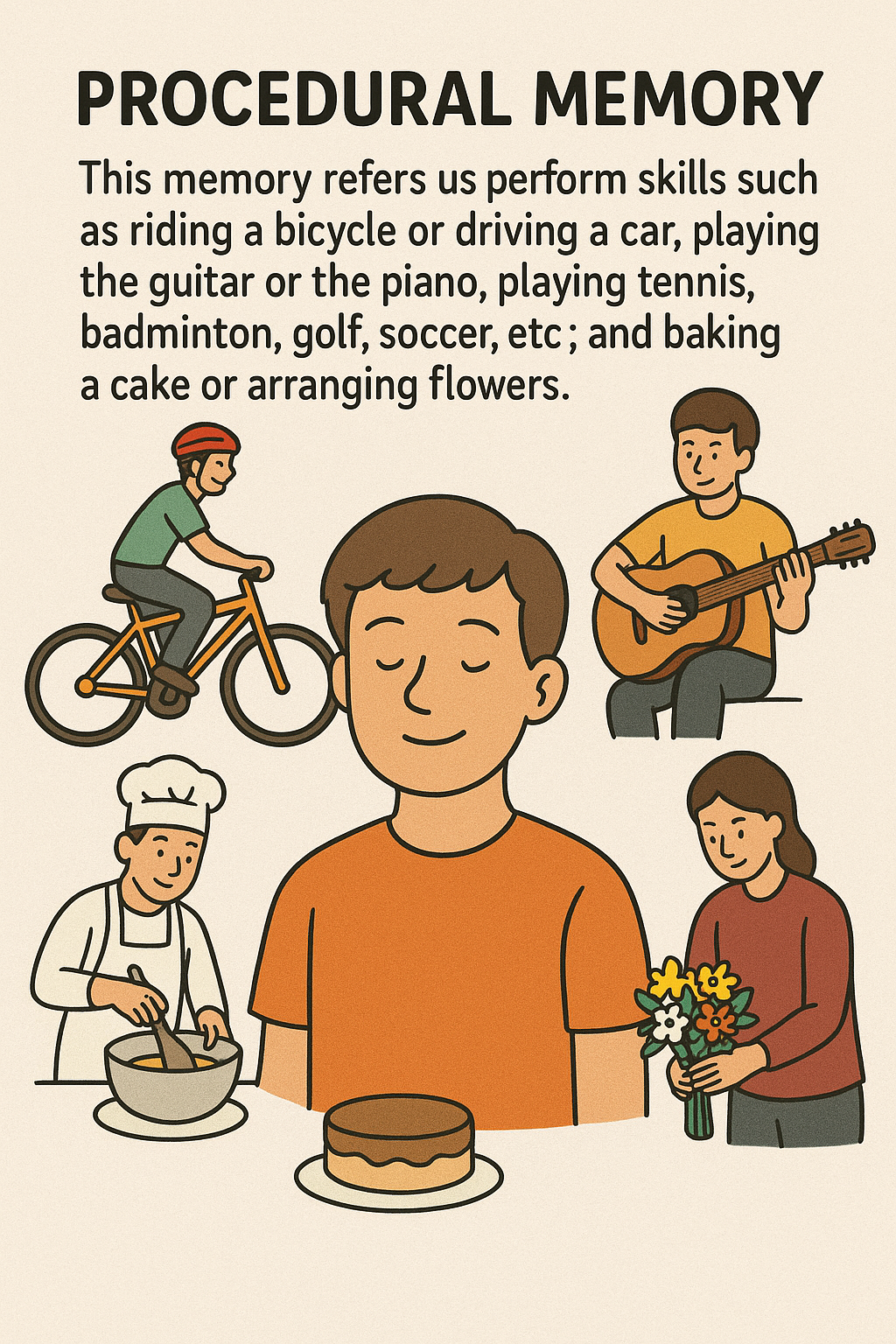
This memory helps us perform skills such as riding a bicycle or driving a car, playing the guitar or the piano, playing tennis, badminton, golf, soccer, etc.; and baking a cake or arranging flowers. In most cases, we just do not forget as we tend to in episodic or semantic memory. At most, our ability to perform those skills declines as we advance in years, and maybe one day we just do not have the strength to perform at all.
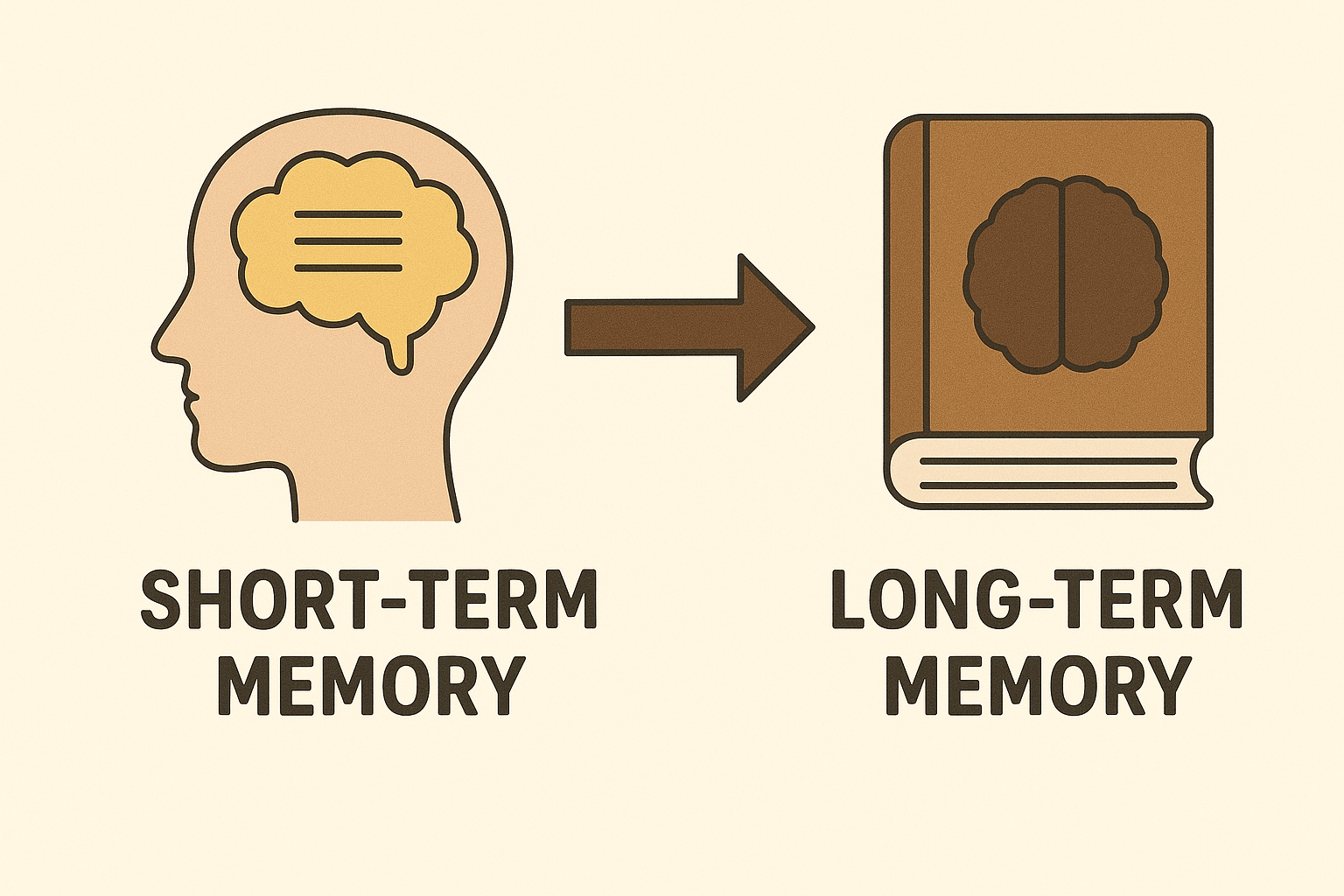
Books on psychology also point out that there are short-term memory and long-term memory. For instance, when we are following a lecture, we store the incoming information in our short-term memory as we jot down notes as fast as we can. Then, when we can find time later, we go over our notes, link up the points and memorize them to store the information in our long-term memory.
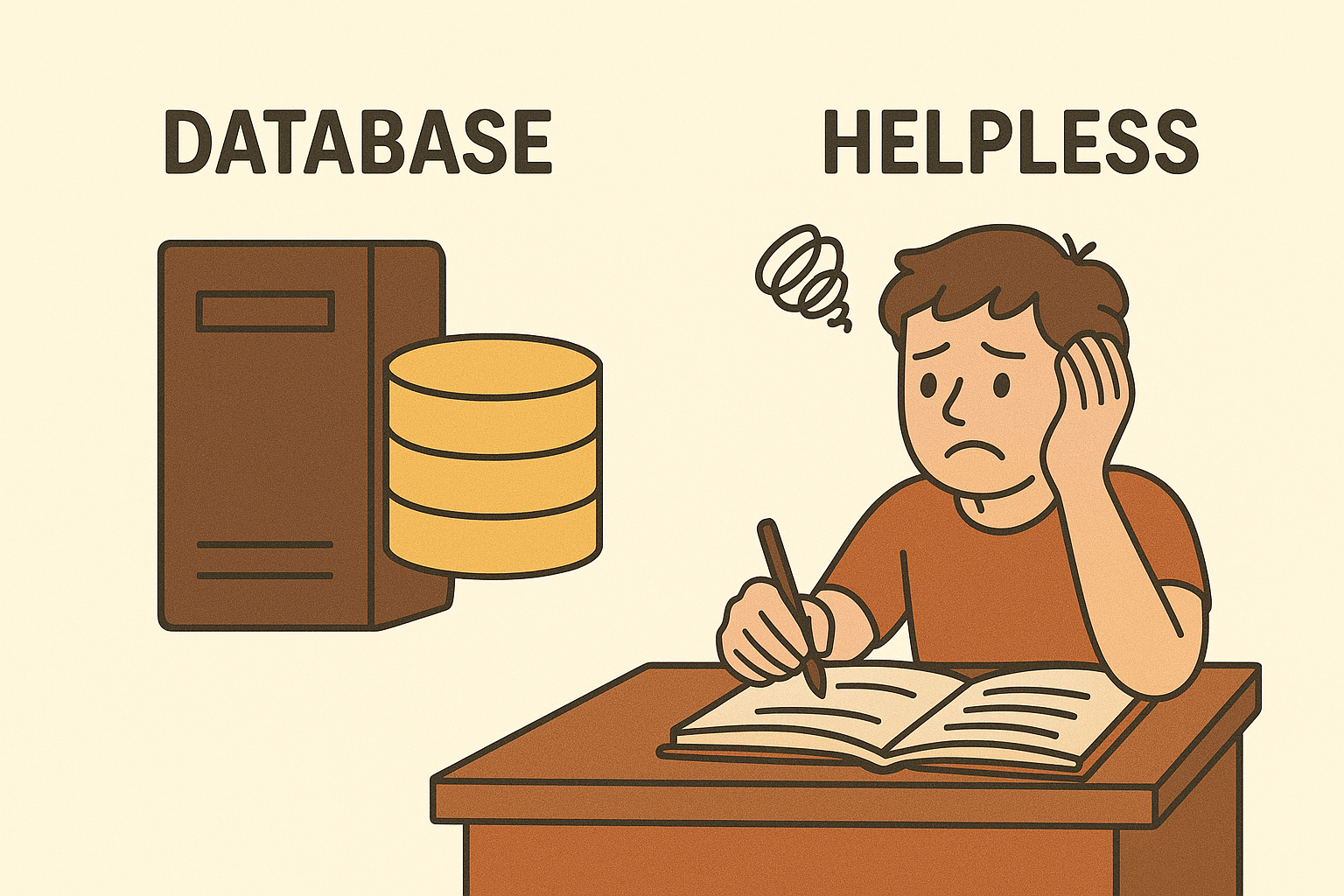
From what has been presented so far, it should be quite plain to us that our memory is just like the database of a computer where a large amount of information on a large variety of subjects is stored and used as and when necessary. Without a database, the computer is useless. Similarly, without memory, we would be utterly helpless and useless. Just imagine how frustrated and upset we get when we cannot remember where we have put our car keys. Put yourself in the place of a student taking an examination and imagine he cannot recall a thing he has studied. You will then be able to understand how helpless he would feel.
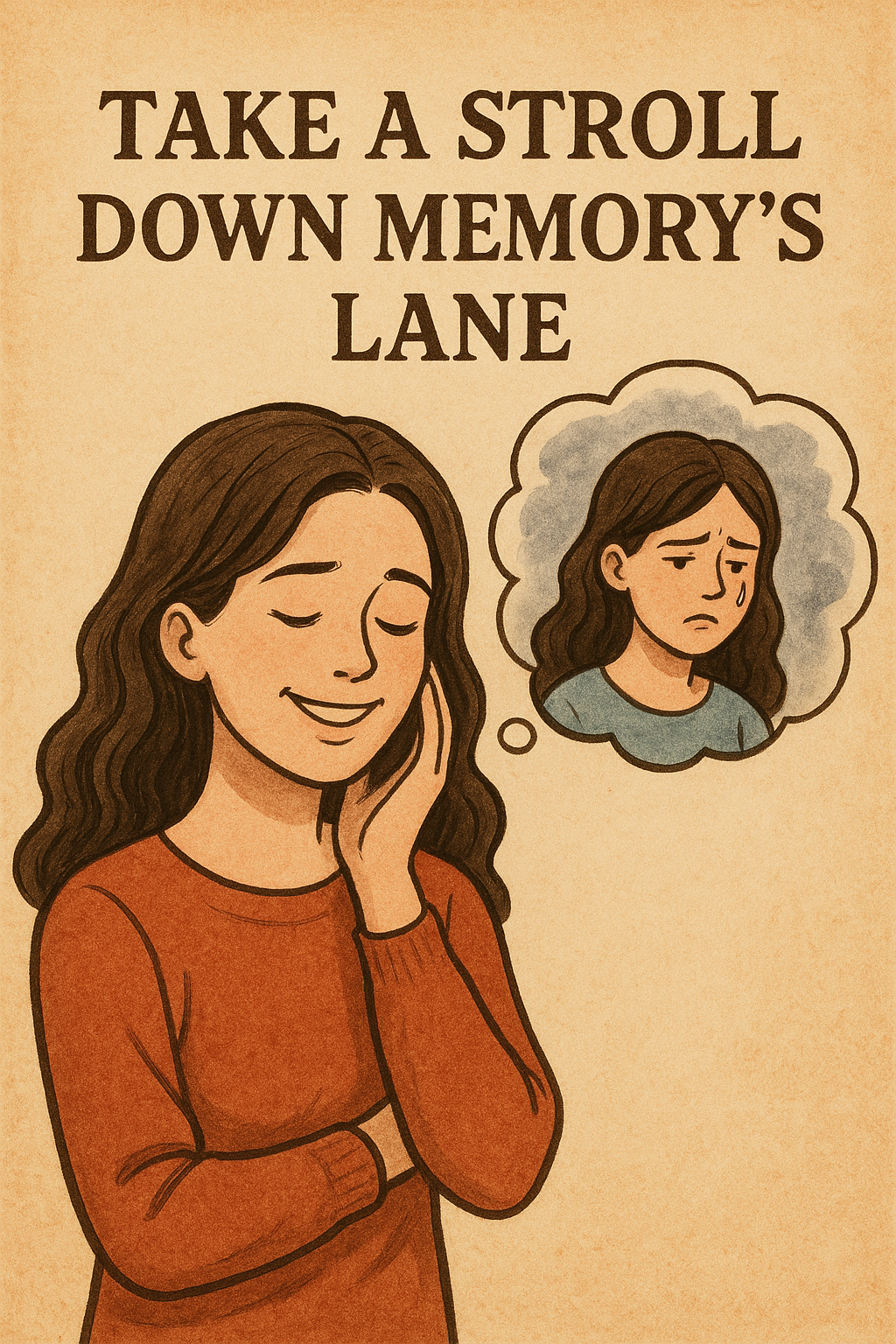
There is another role that memory plays in our lives. Very often, we 'take a stroll down memory's lane' figuratively speaking and go through various emotional states. Sometimes, we smile when we remember something pleasant, or frown when we recall something unpleasant. Thus, depending on what we happen to remember, our memories may be sweet or bitter.
Read the Passage - Audio Version
Local Video Files
Watch videos from your local storage related to the lesson:
Upload Your Own Video:
If the video doesn't play, please upload your video file here.
YouTube Videos
Watch educational videos from YouTube related to the lesson:
Memory-Related Photos
Click on any image to view it in full screen: